
Supporting the industries that build what’s next.
Each industry below opens with the sourcing question, then the parts, the working conditions and what has to be confirmed before a grade is chosen. Materials are candidates to discuss, not a claim of existing customers.
Wire & Cable
Which insulation grade will run on our line and hold its electrical numbers at the frequencies the programme needs?
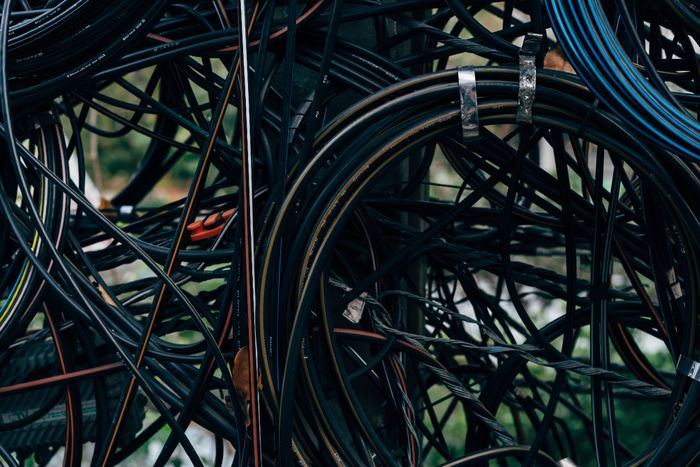 Insulated cable — representative image
- Parts
- Primary insulation on signal conductors
- Jacketing and inner separators
- Foamed or solid dielectric in high-speed twinax and coax
- Working conditions
- Line speed and the melt behaviour the extruder is tooled for
- Wall thickness — thin-wall control on small conductors
- Operating frequency and the loss budget of the cable design
- Rack-adjacent ambient temperature over service life
- Confirm before choosing
- Dielectric constant and dissipation factor at the operating frequency, from the grade’s own data
- Melt flow rate and foaming behaviour if the design uses a foamed dielectric
- Flame and smoke ratings tied to the cable standard, where the design is rated
- Lot-to-lot consistency evidence — CoA per lot
- Materials to discuss
- Documents & samples
- TDS, SDS, lot CoA; UL / flame-rating references where the grade carries them; samples for line trials.
Customer-directed grades are sourced as directed. Where a second grade is evaluated, the cable maker runs its own electrical and processing trials; we do not describe any grade as equivalent.
Electrical & Electronics
Which grade keeps its insulating and sealing properties under sustained heat and chemical exposure, at the volume the programme needs?
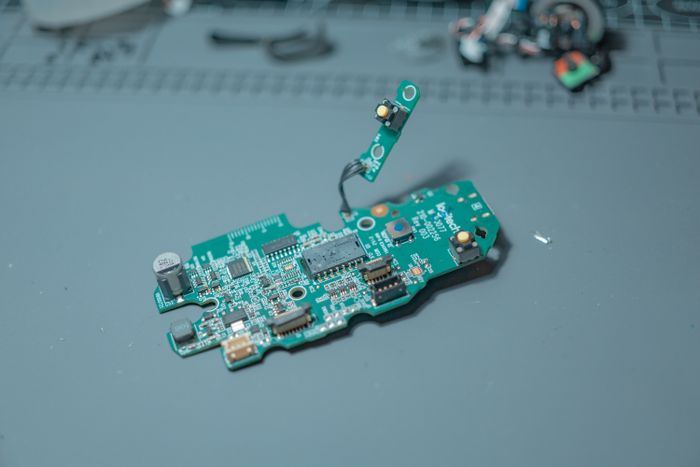 Electronics manufacturing — representative image
- Parts
- Wire and cable insulation in equipment and vehicles
- Power-distribution wiring in dense racks
- Gaskets, seals and protective sleeves
- Molded insulating components
- Working conditions
- Continuous operating temperature
- Chemical or oil exposure
- Mechanical handling — abrasion, cut-through, flexing
- Regional supply and backup for critical sealing grades
- Confirm before choosing
- Temperature rating and mechanical targets from the wire or part specification
- Grade family and melt flow the line is set up for
- Colour and additive package where specified
- Whether a second source is needed for the programme
- Materials to discuss
- Documents & samples
- TDS, SDS, lot CoA; flame and temperature ratings where the grade carries them; samples for line trials.
Grades are aligned across production sites so the same material and documents arrive at each plant.
Chemical Processing
Which fluoropolymer will handle the process chemistry, at the temperature and pressure of the line, in a form we can fabricate?
- Parts
- Chemical-resistant tubing and pipe
- Tank, vessel and pipe linings
- Valve, pump and fitting bodies
- Sheet and machined components for corrosive service
- Working conditions
- Process chemistry — acids, bases, solvents, oxidisers
- Operating temperature and pressure
- Abrasion and mechanical load on the part
- Fabrication method — extrusion, molding, lining, machining
- Confirm before choosing
- Chemical resistance for the specific medium and concentration, from the grade’s own data
- Homopolymer vs. copolymer PVDF, or PTFE / PFA where breadth of resistance is needed
- Dimensions, wall thickness and pressure rating
- Documentation the plant’s specification requires
- Materials to discuss
- Documents & samples
- TDS, SDS, lot CoA; chemical-resistance references where the producer publishes them; samples for your own immersion tests.
Chemical resistance tables are guidance, not a guarantee for a specific medium; the plant’s own testing decides.
Semiconductor Applications
Which high-purity fluoropolymer will meet the extractables and particle expectations of the wet-process line?
 Fiber optics — representative image
- Parts
- Chemical delivery tubing and fittings
- Valve and pump wetted components
- Tank and bath linings
- Filter housings and wafer-handling parts
- Working conditions
- Process chemistries — acids, bases, solvents, ultrapure water
- Purity class demanded by the fab or the tool maker
- Temperature and pressure of the delivery path
- Traceability across lots and sites
- Confirm before choosing
- Purity grade and the producer’s extractables data for that grade
- Form — resin for your molding, or finished tubing and fittings
- Documentation the qualification file requires (TDS, SDS, CoA, origin)
- Change-control expectations if a second source is introduced
- Materials to discuss
- Documents & samples
- TDS, SDS, lot CoA, origin documentation; purity data for the grade in question where the producer publishes it.
Alternative material evaluation for these systems is structured and slow by design; qualification decisions stay with your process engineering.
Robotics & Physical AI
Which materials will hold up inside a joint that flexes ten million times, next to a motor that runs hot, in a machine that has to be safe around people?
- Parts
- High-flex servo, encoder and sensor cabling routed through joints and cable carriers
- Low-friction sliding surfaces, bushings and thrust washers in actuators and grippers
- Seals and gaskets in harmonic drives, hydraulic and pneumatic actuators
- Insulation in motor drives, battery packs and power distribution
- Tactile and pressure-sensing films in grippers and skins
- Working conditions
- Continuous flexing and torsion — bend radius, cycle count, abrasion against carriers
- Motor and drive heat in tightly packed limbs
- Low-friction, dry-running operation without lubricant contamination
- Electrical noise from drives next to signal lines
- Oil, coolant and cleaning-agent exposure
- Confirm before choosing
- Flex-life and abrasion targets from the cable specification, and the jacketing grade the line is tooled for
- Wear rate and PV limit for sliding parts; filled or unfilled PTFE
- Seal geometry, pressure and the fluid it faces
- For sensor films: piezoelectric PVDF grade, thickness and electrode compatibility
- Engineering plastics beyond fluoropolymers — PEEK, POM, PA — handled per enquiry
- Materials to discuss
- ETFE — Tough, abrasion-resistant insulation and jacketing for high-flex robot cable
- PTFE — Low-friction bushings, sliding surfaces, seals and machined wear parts
- FEP — Thin-wall insulation for sensor and encoder lines where signal quality matters
- PVDF — Piezoelectric film for tactile sensing; structural parts in corrosive or wash-down service
- Documents & samples
- TDS, SDS, lot CoA; flex-life and wear data where the producer publishes them; samples for cable-carrier and wear trials.
Robot programmes usually combine fluoropolymers with engineering plastics; we supply both, and quote the engineering-plastics grades per enquiry.
Data Center Infrastructure
Which tubing, fitting and sealing materials will stay compatible with the coolant chemistry over years of thermal cycling?
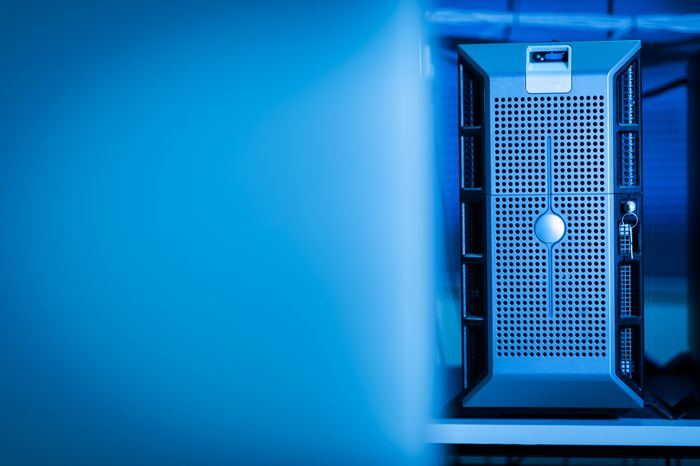 Data-center equipment — representative image
- Parts
- Coolant tubing and manifolds
- Quick-disconnect and fitting bodies
- Seals and gaskets at joints
- Insulating parts where fluid paths meet power
- Working conditions
- Coolant chemistry and additive package
- Operating temperature and cycling range
- Pressure and flow; burst and kink requirements for tubing
- Long service life without extractables affecting the loop
- Confirm before choosing
- Chemical compatibility for the specific coolant, from the grade’s own data or your test
- Tubing dimensions and tolerances; fitting geometry
- Seal material choice — a fluoropolymer is not always the right seal
- Documentation needed for the platform’s qualification file
- Materials to discuss
- Documents & samples
- TDS, SDS, lot CoA; compatibility references where published; sample tubing and fittings for loop testing.
We supply materials for cooling components; we do not design cooling systems or certify coolant compatibility.
Describe the part, not just the polymer.
Send the application, the part, the working conditions and where it is built. We come back with the materials worth discussing and the documents we can confirm.